

The rise of AI influencers
Anamaria Isac
10th Grade A
All of us know how in the span of 1-2 years AI has had significant technological growth until it has gotten to the point where we begin having issues differentiating it from reality. And at today’s time? It’s becoming a constantly growing and worrying issue.
Now, how do we define an AI-influencer? Well, it’s a virtually generated character that has its own appearance, personality and nowadays even backstory, and unlike a real-life influencer, it’s immune to fatigue and aging, as it can be continuously updated and optimized to fit modern trends and stay aligned with the audience’s preferences.
Firstly, the rise of virtual entities brings concerns about authenticity, ethics and the erosion of genuine human connection in digital spaces. The audience often creates strong emotional bonds with these personas as they mistake them for real human beings. Today, it’s not difficult to confuse an AI with a real person as they are now able to show empathy, humor and even vulnerability, much as a real life individual.
Over time, this issue can and will desensitize audiences and make them more accepted of artificial relationships and less capable of distinguishing reality from fiction.
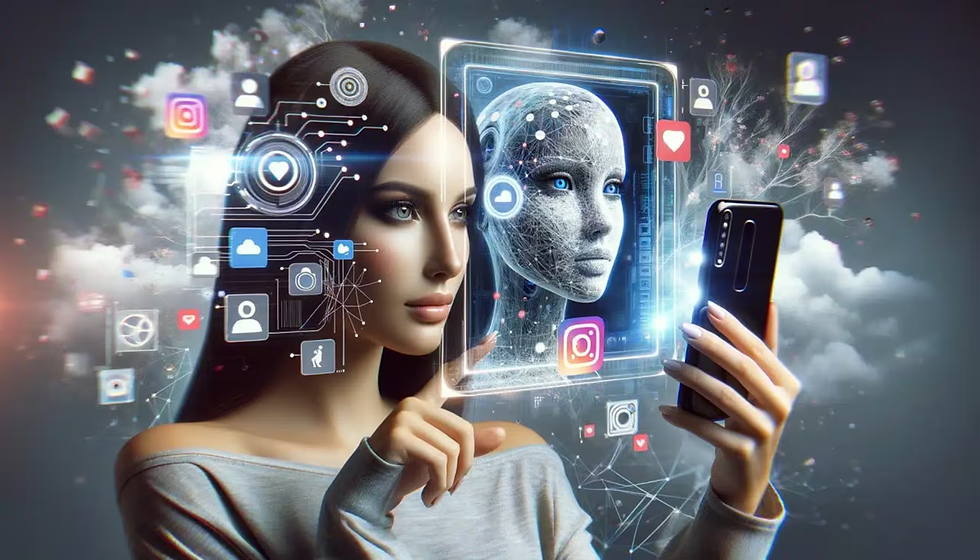
Furthermore, this also impacts the human influencers and creative professionals. Because AI influencers become increasingly widespread, the human influencers, artists and models who rely on social media for income start becoming replaced. Since the virtual entities can easily be updated to accommodate the latest standards, human influencers are no longer needed as many brands begin investing in AI forms due to the cheaper price and easier advertising. This issue leads to potential job losses and a devaluation of human creativity. This shift could also widen the gap between larger corporations with access to advanced AI technologies and smaller, individual corporations that are unable to compete with the speed and scalability of digital personas.
Secondly, the concerns regarding privacy shouldn’t be ignored. AI influencers rely on enormous amounts of personal and behavioral data to tailor content, personality, tone and responses. This problem adds up to the mix-up between what’s real and what’s not. This leads people to become unaware of who or what they’re interacting with. An AI can copy and replicate the personality and even the looks of a real person and use personal information from one or multiple personal sources to model itself. This raises concerns about how much information this AI collects and potentially sells to anonymous buyers. The very same algorithms that make these influencers effective also makes them invasive at they learn how to emotionally profile users to maximize attention and trust.
Additionally, from a cultural standpoint, the emergence of AI influencers may contribute to the further idealization of perfection on social media. Since these virtual entities can be digitally designed to embody flawless beauty standards and impossible lifestyles, they may intensify the already harmful pressures of comparisons and body image among audiences. Unlike human influencers who show and parade imperfections, AI can be endlessly polished to perpetuate unrealistic ideals and deepen social insecurities.
Ultimately, the rise of AI influencers exposes society to complex, ethical and cultural risks. The line between innovation and manipulation becomes dangerously thin when emotional connection is driven by algorithms rather than empathy and true human feelings. If not carefully regulated and transparently presented, the world of AI influencers could lead to a future where authenticity is commodified, privacy is compromised, and human creativity is overshadowed by artificial perfection.


Comments